
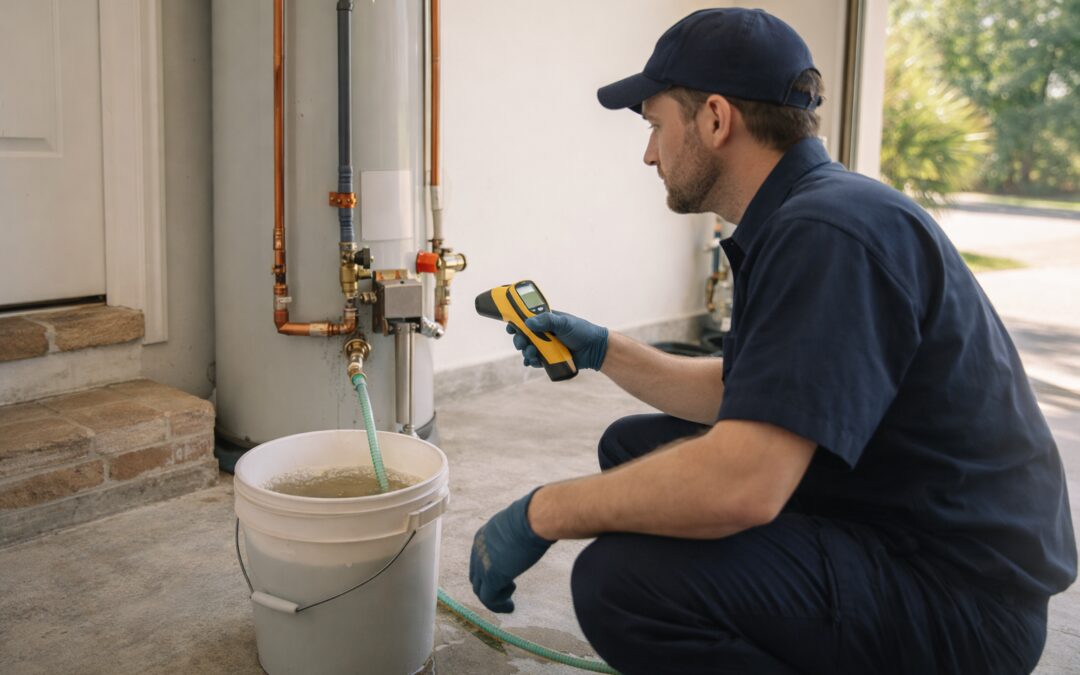
Sediment and scale steal efficiency, shorten equipment life, and make hot water unreliable. Professional water heater cleaning clears that buildup, resets safety settings, and helps prevent mid-season surprises. KO Plumbing is a locally owned, owner-operated Charleston plumber that cleans and tunes both tank and tankless systems with clear pricing and careful workmanship. We explain each step before work begins and label final settings so the next adjustment is simple. You will know what we are doing, why it matters, and how it protects your home.
Why Water Heater Cleaning Matters
Mineral particles settle at the bottom of tank models and coat heat-transfer surfaces in tankless units. This buildup forces longer burner or element run time, raises utility costs, and can overheat parts. Flushing or descaling removes sediment so heat transfers quickly again, restores steady temperature, and reduces noise. EPA WaterSense notes that a yearly flush helps reduce sediment that hurts efficiency, and many homeowners benefit from a simple visual inspection for leaks in between. See WaterSense’s home maintenance checklist.
A clean heater heats faster and uses less energy because heat moves into the water instead of into a layer of sediment. On tank models, sediment can block the drain valve and bury the lower element. On tankless models, scale clogs narrow passages in the heat exchanger and can trigger error codes. Cleaning resets performance so showers run steady and dishes get rinsed with truly hot water. It can also quiet rumbling that happens when bubbles fight through a blanket of sediment. Over time, that extra heat at the bottom of a tank can warp components or trip safety devices, so prevention matters.
What a Professional Water Heater Cleaning Service Includes
A water heater cleaning visit from KO Plumbing covers inspection and cleaning, then a safety and performance check. Here is what our water heater cleaning service typically includes:
- Safety and leak check around the tank or unit, valves, connections, and venting.
- Tank models: drain and flush to remove sediment from the bottom of the tank; test the temperature and pressure relief (T&P) valve; inspect the anode rod and recommend replacement if depleted.
- Tankless models: connect a pump and descaling solution to clean the heat exchanger; rinse and restore lines; clean inlet screens and air filters; check condensate on condensing units; review error codes.
- Electrical and gas checks, including breaker and gas-pressure confirmation.
- Thermostat calibration near 120°F for comfort and safety, labeled for future reference. For temperature basics, see the U.S. Department of Energy’s guidance on 120°F. The Department of Energy’s Energy.gov
- Start-up, purge of air from hot-water lines, and a clean work area. We document findings, note parts to watch, and share simple upkeep tips you can do between visits. If parts are nearing the end of their service life, we explain options clearly so you can decide what to replace now versus later.
Want to combine tasks in one visit? See our full list of plumbing services.
DIY vs. Professional Water Heater Cleaning: What to Consider
Some homeowners flush their own tanks, but there are safety risks and warranty language to review first. You work around scalding water, combustion gas, and electrical connections. If a drain valve will not close fully, you can be left without hot water until the valve is replaced. Manufacturer guidance and many warranties expect maintenance to follow the manual, and some recommend a qualified technician. If you are unsure, book a pro and ask to observe so you understand what happens and how to spot early warning signs in the future. Either way, always turn off the power or gas at the unit and verify the water is cool before opening the drain. If you have a tankless unit, DIY work usually requires isolation valves and a descaling pump. Using the wrong solution or leaving air in the lines can cause error codes and shutdowns. If you prefer peace of mind, schedule service, and we will handle the process end-to-end.
Hot Water Heater Cleaning & Maintenance Schedule
How often you clean depends on water chemistry and usage. WaterSense suggests a yearly flush for tanks. Rheem recommends an annual tank flush and inspection of the anode rod, and descaling for tankless units every six to twelve months, depending on hardness. AO Smith guidance is similar: tanks usually need flushing at least once per year, and harder water may require more frequent care. If you are unsure how hard your water is, ask your water provider for a hardness number in parts per million or grains per gallon, or ask us to test during your visit.
Tank vs. Tankless: Water Heater Cleaning Steps
Both types need routine care, but the steps differ:
- Tank models: drain and flush to remove sediment, test the T&P valve, inspect the anode rod, verify venting, and confirm the thermostat setting close to 120°F.
- Tankless models: perform water heater cleaning service with descaling, inlet-screen and air-filter cleaning, and a condensate check on condensing units. Verify error-code history and flow.
- For every unit: check for leaks, confirm gas pressure or breaker status, and label the final temperature so future adjustments are simple.
For temperature guidance and efficiency basics, see the U.S. Department of Energy’s note that most homes do well near 120°F.
Charleston Hardness
Charleston’s municipal water averages about 58.4 ppm, which is about 3.4 grains per gallon. That is soft to slightly hard. Sediment builds more slowly than in many inland cities, but annual cleaning is still smart insurance because usage and neighborhood water chemistry vary. Private wells or some filters can change the hardness. Let us know whether you use a softener or a whole-home filter, and we will adjust the method accordingly.
FAQs: water heater cleaning
- Is it worth flushing a water heater? Yes. Removing sediment restores heat transfer, reduces rumbling or popping caused by boiling trapped under sediment, and gives a chance to catch small leaks before they grow.
- How often should I clean a tankless water heater? Many makers recommend descaling every 6 to 12 months, depending on the hardness. Rheem publishes that range.
- Can cleaning improve hot-water recovery time? Yes. Removing scale and sediment helps burners or elements heat water more efficiently, which enhances recovery and consistency.
- What happens if I never flush? Sediment can insulate heat from the water so the burner or elements run longer than needed. That stresses components and can shorten service life.
- Can I clean the water heater myself? You can flush a tank if you follow instructions carefully, but there are safety and warranty considerations. When in doubt, hire a pro and ask to observe. The EPA’s WaterSense checklist is a good quick reference for annual tasks.
Ready to Schedule Water Heater Cleaning?
Restore efficiency and peace of mind with professional water heater cleaning. Call 843-499-3945 or contact KO Plumbing to schedule. Have questions about other work? Our plumbing services page outlines everything we can handle, and you can learn more about our owner-operated approach on our About page.